

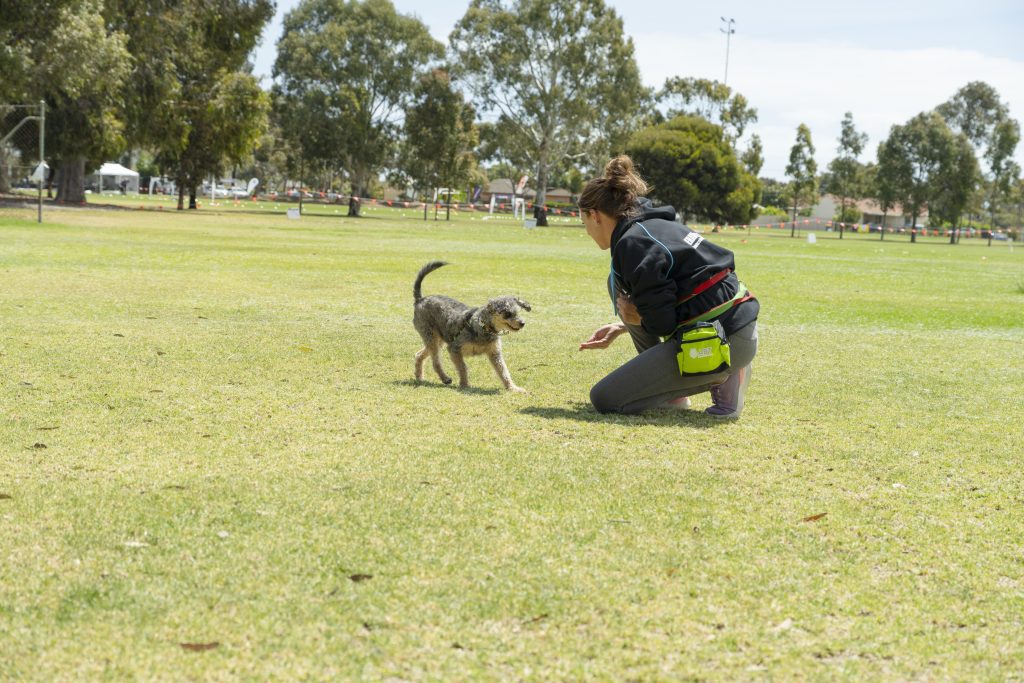
Off lead dog training is one of the most rewarding, yet challenging aspects of dog ownership. The thought of your dog running freely and confidently without a lead is exciting, but can also cause anxiety. At ABT+ we developed our off lead training course, Paws Unleashed, to address your concerns about giving your dog freedom and building a strong, reliable bond.
This class focuses on teaching your dog to remain engaged with you and responsive to cues, even around the highest level of distraction. Through consistent training, we can help you achieve the reliability needed to let your dog enjoy freedom while staying safe and under control.
Paws Unleashed has no test, we simply aim to improve your dogs obedience, your confidence, and your overall abilities as a team. As we are able to adjust the course to suit each individual dog, the course can also be repeated, with the challenge scaling according to your progress each time.
If you love taking your dog to the beach, hiking, or to parks, this course will help make that a safer and more enjoyable experience. Book now to build skills you can trust.
Sundays 10:45am - 11:45am
5 weeks
All of our dogs must be up to date with vaccinations. That means a C5 for adult dogs, and C4 for puppies.
While any dog can join, you will get the most out of this course if you have completed our Level 1 Life Skills and Obedience course, or equivalent.
As part of this course, we teach and discuss what your obligations are as an owner when it comes to having your dog off lead in public. This is primarily based on the Dog and Cat Management Act (1995).
We take this very seriously, and will be advise owners during this course of what is required based on what stage of training your dog is at. We ensure that owners are given the tools and knowledge to be safe, confident, and responsible off lead handlers.
Off-lead training is best suited to dogs that already have a solid foundation of on-lead obedience and are ready to build greater reliability.
Many owners dream of enjoying off-lead walks but aren’t quite sure when the timing is right. Rather than focusing on your dog’s age, it’s more helpful to consider whether they can already respond consistently to basic cues while on lead.
Our Paws Unleashed class is designed to take those existing skills and develop them further. We work on improving recall, focus, stays and handler engagement before expecting dogs to work reliably without a lead. The aim isn’t simply to remove the lead, it’s to gradually earn that freedom through structured training and practice.
You’ll also learn how to recognise whether your dog is ready for the next stage of training. Every dog progresses at their own pace, and understanding when to increase difficulty is just as important as teaching the behaviours themselves.
For many owners, this creates confidence. Instead of wondering whether it’s safe to let their dog off lead, they’ll better understand how to build reliability step by step while continuing to reinforce good habits.
Off-lead freedom is far more enjoyable when both owner and dog have the skills to handle it, and developing those foundations is exactly what this course is designed to support.
The course focuses on building a stronger, more reliable recall by practising under increasing levels of distraction. We can’t promise perfect recall, no one can, but we can show you how to develop this skill to near-perfection.
Recall is one of the most important skills an off-lead dog can have, but it’s also one of the most challenging because the real world is full of competing distractions. Other dogs, wildlife, interesting smells and exciting environments can all influence how quickly a dog responds.
That’s why our Off Lead Dog Training class doesn’t just practise recall in easy situations. Training gradually progresses through controlled environments with increasing levels of distraction, allowing both you and your dog to develop confidence before tackling more challenging scenarios.
You’ll also learn practical techniques that help make coming back to you worthwhile, including appropriate reward strategies, understanding release cues and setting your dog up for success throughout the training process.
Perhaps just as importantly, you’ll develop a better understanding of when to ask for recall and how to continue improving it outside of class. Reliable off-lead skills aren’t built through repetition alone, they’re strengthened through thoughtful practice and consistency.
By the end of the course, you’ll have practical tools that help you continue developing recall as your dog gains experience in different environments, making future adventures together feel more enjoyable and less uncertain.
A dog that chooses to pay attention to you is better equipped to respond when distractions appear.
Many owners think successful off-lead training starts with recall, but recall is only one part of the picture. Before your dog can respond to a cue, they first need to notice you and remain engaged, even when something more interesting is happening nearby.
That’s why improving focus is a key part of our Off Lead Dog Training class. Throughout the course, you’ll work on exercises that encourage your dog to prioritise you while gradually introducing more challenging distractions.
This creates benefits that extend beyond off-lead walking. Better engagement often makes everyday communication clearer, helping your dog stay connected with you during walks, training sessions and new experiences.
You’ll also develop your own skills as a handler by learning how to communicate more consistently and recognise the moments when your dog is ready to succeed. Rather than constantly competing with the environment, you’ll learn how to build your dog’s attention in a way that supports long-term progress.
When your dog understands that staying connected with you leads to positive outcomes, off-lead training becomes less about chasing your dog around the park and more about working together as a team.
A long line allows dogs to continue developing their off-lead skills while maintaining an important layer of safety and control.
Many owners are eager to remove the lead as soon as their dog starts responding well, but progressing too quickly can make training more difficult. A long line provides an opportunity to practise recall, stays and other off-lead skills while still giving owners a way to manage the situation if needed.
Throughout the course, you’ll learn why this step is so valuable and how to use a long line effectively as part of your dog’s training journey. Rather than seeing it as a limitation, it becomes a practical tool for building confidence and reinforcing good habits before moving to complete off-lead freedom.
Using a long line also allows you to introduce more challenging environments gradually. As your dog’s reliability improves, you’ll be able to practise in situations that better reflect everyday life while still supporting their success.
This measured approach helps owners feel more confident because progress is based on demonstrated skills rather than guesswork. Instead of hoping your dog will come back, you’re actively building the behaviours that make reliable off-lead work possible.
The result is a training journey that prioritises preparation, consistency and thoughtful progression at every stage.
The course teaches you how to guide your dog effectively so you can continue building reliable off-lead behaviour outside of class.
Off-lead training isn’t only about what your dog learns, it’s equally about developing your own skills as a handler. Clear communication, good timing and thoughtful decision-making all play an important role in helping your dog succeed.
Throughout the course, you’ll learn practical concepts such as using release cues effectively, rewarding behaviours strategically, setting your dog up for success and recognising when to increase or reduce the difficulty of an exercise.
These are skills that continue to benefit you long after the course finishes. Rather than relying on the training environment alone, you’ll understand how to practise safely and confidently in everyday situations.
The class also challenges owners to refine their handling techniques. Small adjustments in timing, consistency and communication can have a significant impact on how clearly your dog understands what’s expected.
Many owners find that as their own skills improve, so does their confidence. Instead of second-guessing each decision, they develop a clearer plan for continuing their dog’s training and maintaining progress over time.
Ultimately, successful off-lead training is built on teamwork, and that starts with giving owners the knowledge to support their dogs well beyond the classroom.
Yes, the course includes practical training in a local park to help you apply your skills outside the training grounds.
Dogs don’t live their lives in perfect training environments, which is why it’s important to practise skills where you’ll actually use them. After building foundations in a controlled setting, the final week of the course takes place at a local park where owners receive guidance in a practical, everyday environment.
This gives you the opportunity to experience new surroundings while working with professional support nearby. You’ll learn how to apply the same principles you’ve practised throughout the course when there are naturally occurring distractions and changing conditions.
For many owners, this is one of the most valuable parts of the program because it bridges the gap between structured classes and independent training. You’ll gain practical advice that can help you continue progressing after the course has finished.
Rather than wondering how to transfer your dog’s skills into everyday life, you’ll leave with a better understanding of how to approach off-lead training in different locations while continuing to build confidence and reliability together.
The goal is to help you feel prepared for future adventures by showing you how training can be applied beyond the classroom.
After the course, you may wish to take this real-world training a step further by joining our Outdoor Group Classes to further challenge your dog in busier environments.
No, reliable off-lead skills can benefit many everyday activities where dogs are permitted to exercise off lead.
Every owner has a different vision of what enjoying life with their dog looks like. For some, it’s visiting an off-lead park. For others, it’s exploring walking trails, spending time at the beach or simply feeling confident that their dog will respond when called during appropriate off-lead opportunities.
The purpose of off-lead training is to build reliability, communication and trust so that these experiences become more enjoyable for both ends of the lead.
Throughout the course, you’ll work on practical skills including recall, stays, focus and handler engagement while learning how to continue developing these behaviours over time. These foundations can support many different lifestyles, regardless of where you choose to spend time with your dog.
Even if your dog isn’t off lead every day, having stronger recall and greater responsiveness can make many situations easier to manage. Owners often appreciate knowing they have a clearer way to communicate when it matters most.
Ultimately, off-lead training isn’t just about giving dogs more freedom, it’s about helping owners feel more confident when that freedom is appropriate.
ABT’s Off Lead Dog Training course combines practical skill development with owner education to help build confident, reliable teams.
Learning to work confidently without a lead is a journey for both dog and owner. At ABT, our course focuses on developing the skills that support safe, enjoyable off-lead experiences while giving owners the knowledge to continue training independently.
Rather than concentrating on recall alone, the program develops the broader skills that contribute to off-lead reliability, including focus, stays, handler communication, targeting and understanding release cues. Training progresses in a controlled environment before finishing with practical guidance in a local park, helping you apply what you’ve learned in a real-world setting.
The course also places a strong emphasis on owner education. You’ll learn how to structure training sessions, reward effectively and continue progressing long after the final class.
For many owners, the greatest value isn’t simply having a dog that can be off lead. It’s knowing they have built a stronger partnership based on communication, trust and shared understanding.
If you’re looking for off-lead dog training in Adelaide, Paws Unleashed provides a structured pathway to help you and your dog develop the confidence and skills needed to enjoy greater freedom together.